Starting September 30, 2026, millions of Android phones will start rejecting apps they would have installed without question a day earlier. Android developer verification is Google’s most aggressive move yet against sideloading, and it has split reactions right down the middle: welcome protection to some, a worrying step toward a locked-down Android for others. Here is exactly what changes, who is affected first, and how to keep control of your phone either way.
What Is Android Developer Verification, Exactly?
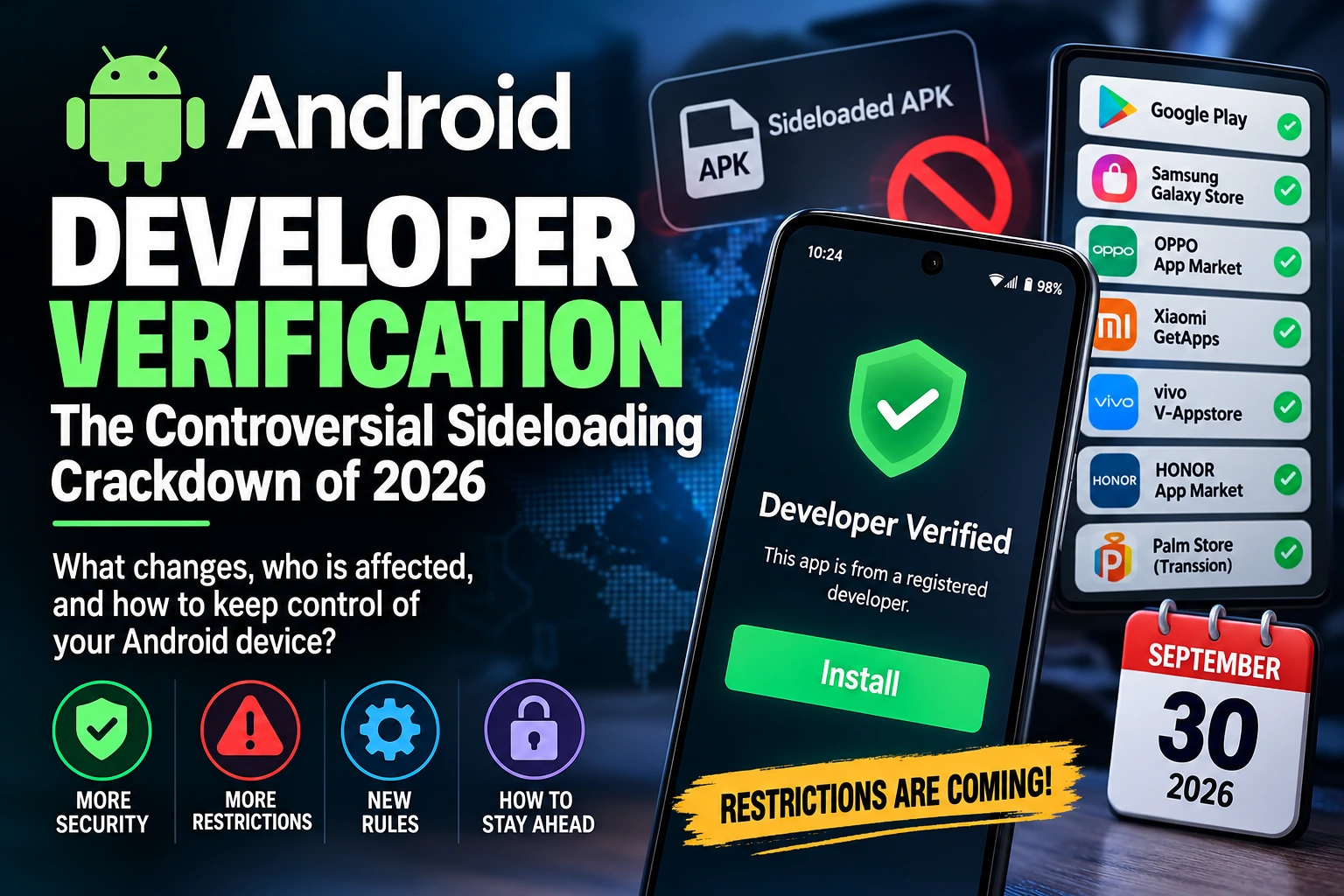
Android developer verification is a new identity check that Google is layering underneath every app installation on a certified Android device, whether that app comes from Google Play, a rival app store, or a direct APK file downloaded from a website. It does not review what an app does. It confirms who built it. Suzanne Frey, Google’s VP of product for trust and growth on Android, compared it to an ID check at the airport: it confirms a traveler’s identity, not what is inside their bag.
The trigger is malware. Google’s own telemetry found that apps installed from internet-sideloaded sources contained more than 50 times more malware than apps distributed through Google Play when it first announced the plan in 2025. By the time enforcement neared in 2026, Google said that gap had widened to more than 90 times. Scammers were exploiting anonymity, building convincing fake versions of real apps, and distributing them outside any system that could trace them back to a person or a company.
The Rollout Timeline: How We Got Here
This was never a surprise announcement. Google has been phasing it in for over a year:
- April 2026: Google introduced Android Developer Verification broadly, and developers began registering.
- June 2026: A new system service began rolling out to devices, and limited-distribution accounts opened early access for students and hobbyists.
- July-August 2026: The Developer Console API went global, alongside the free limited-distribution tier and the advanced flow for sideloading unregistered apps.
- September 30, 2026: Enforcement begins in Brazil, Indonesia, Singapore, and Thailand, across seven app stores: Google Play, HONOR App Market, OPPO App Market, Samsung Galaxy Store, Transsion’s Palm Store, vivo’s V-Appstore, and Xiaomi’s GetApps.
- 2027 and beyond: Google plans a global rollout after reviewing feedback from this first phase.
What Actually Changes for Everyday Users on September 30
Not everyone is affected equally, and the practical impact depends entirely on how you use your phone:
- If you only install apps from Google Play: nothing changes. Google says over 99% of Play Store apps are already registered to verified developers.
- If you occasionally sideload an APK from a website: you will start seeing warnings if the app’s developer is not registered, and in the four launch countries, unregistered apps may be blocked outright from the seven listed stores.
- If you are a power user who deliberately installs unverified or experimental software: you keep that ability, but through a more deliberate path than before.
How to Keep Sideloading Apps After the Verification Rollout
Google has been explicit that sideloading is not being banned. If you rely on unregistered or unverified apps, here is how to keep that option open:
- Use the advanced flow. Android now includes a dedicated path for installing apps from unverified developers, built with extra safeguards, including a waiting period, so you cannot install an unfamiliar APK in a moment of panic or coercion.
- Use ADB (Android Debug Bridge). Developers, testers, and enthusiasts can continue sideloading through ADB exactly as before; this workflow is untouched by the new requirement.
- Check the Google Systems service. The verification check runs through a system service visible in your device’s Google Systems settings, so you can confirm it is active and see what it reports.
- Know your country’s timeline. If you are outside Brazil, Indonesia, Singapore, or Thailand, none of this applies to you yet. It will not reach other countries until 2027 at the earliest.
Why This Rollout Is Controversial
The reaction has been genuinely split, and both sides have a real point.
The case for it: a 90-times difference in malware rates is not a rounding error. Android developer Verification does not require Google to review an app’s code or block competing app stores outright; it just makes it harder for a scammer to hide behind total anonymity after getting caught once. For anyone who has installed a fake banking or messaging app from a sketchy link, this is a real, measurable safety improvement.
The case against it: sideloading has always been one of Android’s defining differences from iOS, and critics argue that gating it behind an identity check, even a lightweight one, hands Google more control over what counts as a legitimate app, on a platform whose entire pitch was that you did not need Google’s permission to install software.
Open source and hobbyist developers who distribute apps outside Play, sometimes for free and without any business entity behind them, now have to register too, even under the free limited-distribution tier. Some worry the four-country test run is a soft launch for a much stricter global default in 2027, arriving right as Google separately faces regulatory pressure in Europe over how much control it exerts over its own platforms.
What Developers Need to Do Before Their Market Opens
If you distribute an Android app to users in Brazil, Indonesia, Singapore, or Thailand through any of the seven covered stores, register before the deadline or risk your app failing to install:
- Already on Google Play? Check your verification status on the Play Console home page. Most developers are already registered automatically.
- Distributing only outside Google Play? Register through the Android Developer Console. A Full Distribution account costs a one-time 25 dollars and covers unlimited apps and installs.
- A student or hobbyist with a small user base? The free Limited Distribution account covers up to 20 authorized devices, aimed specifically at people who are not running this as a business.
Frequently Asked Questions
Is Google banning sideloading on Android?
No. Sideloading still works. Apps from unverified developers require an extra step, called the advanced flow, or installation through ADB, rather than being blocked entirely.
Which countries are affected first?
Brazil, Indonesia, Singapore, and Thailand, starting September 30, 2026. Google plans to expand the requirement globally in 2027 after evaluating this rollout.
Do I need to do anything if I only use the Google Play Store?
No. Over 99% of Google Play apps are already registered to verified developers, so most Play Store users will not notice any change.
How much does Android developer verification cost?
A Full Distribution account is a one-time 25 dollar fee covering unlimited apps. Hobbyists and students can register for free through a Limited Distribution account, capped at 20 authorized devices.
Final Thoughts on Android developer verification
Android developer verification is not the end of sideloading, but it is the end of anonymous sideloading in Brazil, Indonesia, Singapore, and Thailand starting September 30, 2026, with the rest of the world to follow in 2027. Whether that trade-off feels reassuring or worrying probably depends on how often you install apps Google has never heard of. Either way, the advanced flow and ADB mean the choice, for now, still belongs to you. For more on how attackers exploit weak points like this, see our breakdown of the warning signs of session-hijacking malware.