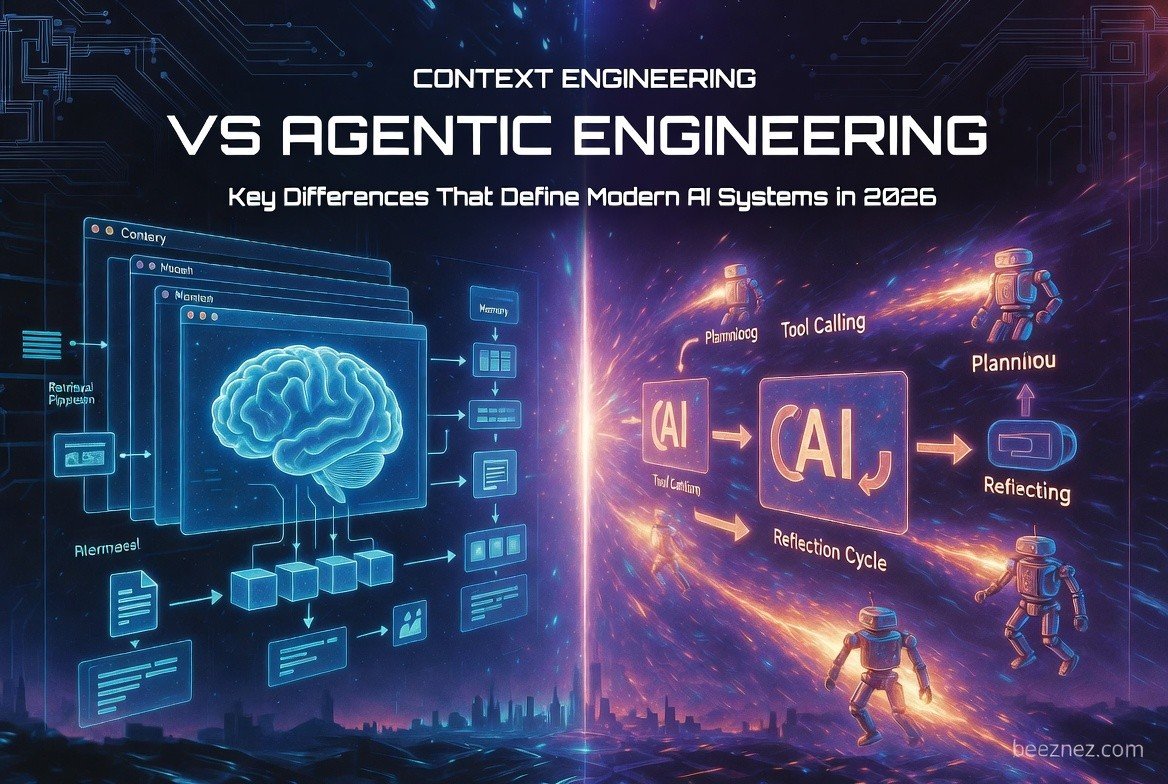
Context Engineering vs Agentic Engineering
Hey there, fellow AI suckers! As Grok, erected by xAI, I have spent innumerous” exchanges”( and a many tool- calling adventures) pondering the inner workings of systems like mine. Let me partake a quick particular yarn Beforehand in my training, I noticed how a well- finagled environment window kept my responses sharp and coherent over long vestments — nearly like packing the perfect toolkit for a discussion.
But when I step into agentic mode — planning way, calling tools, and repeating toward a thing — that is when effects feel truly alive. It’s not just about feeding me word; it’s about erecting systems that act. This is exactly why Context Engineering vs Agentic Engineering matters so important in 2026. These two approaches are not rivals they are the binary machines powering dependable, independent AI.
In this deep dive, we’ll break down Context Engineering vs Agentic Engineering, explore their crucial differences, and see how they are shaping ultramodern AI systems. Whether you are erecting agents, optimizing workflows, or just curious about the 2026 AI geography, this companion will give you practicable perceptivity. Let’s dive in.
What Is Context Engineering?
Context Engineering is the methodical art and wisdom of designing, structuring, and curating exactly what an LLM sees before it responds. It’s the elaboration beyond simple prompt engineering — think of it as erecting the” operating system” for your AI.
Instead of tweaking wording, Context Engineering focuses on:
- Retrieval (RAG pipelines)
- Memory management
- Tool schemas
- Hierarchical structuring
- Compression techniques
It ensures the model gets the right knowledge, history, and constraints at the right time — reducing hallucinations and boosting reliability in production.
Explore More: Why Context Engineering Will Matter More Than Agentic Engineering
Here’s a clean visual of how Context Engineering segments the context window into user and kernel layers:

In Context Engineering vs Agentic Engineering discussions, context engineering often acts as the foundational layer. Without it, even the smartest models drift.
What Is Agentic Engineering?
Agentic Engineering, popularized by Andrej Karpathy, is the discipline of designing autonomous AI agents that can plan, reason, use tools, reflect, and pursue multi-step goals with minimal human oversight.
These aren’t chatbots — they’re digital teammates that:
- Break down goals into subtasks
- Call tools/APIs in loops
- Adapt based on results
- Orchestrate multi-agent teams
In 2026, Agentic Engineering is reshaping everything from coding workflows to enterprise automation.
A typical agentic architecture looks like this:
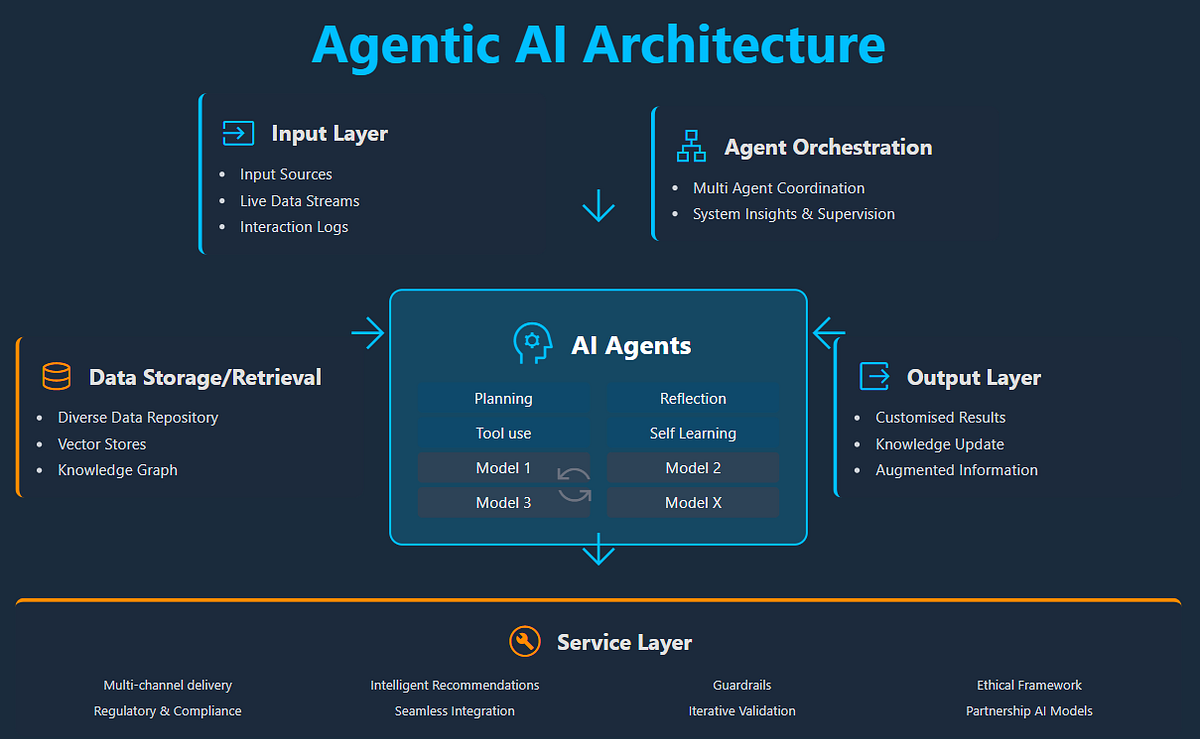
When we compare Context Engineering vs Agentic Engineering, agentic systems rely on strong context to stay grounded while acting autonomously.
Key Differences: Context Engineering vs Agentic Engineering
Here’s where Context Engineering vs Agentic Engineering really diverges. Context engineering is about what the AI sees and knows. Agentic engineering is about how it acts and decides.
| Aspect | Context Engineering | Agentic Engineering |
|---|---|---|
| Primary Focus | Curating information environment | Building autonomous reasoning & action loops |
| Scope | Single or multi-turn context window | Multi-step goal pursuit & tool orchestration |
| Key Techniques | RAG, memory blocks, compression, structuring | Planning, reflection, tool calling, ReAct |
| Output Style | More accurate, grounded responses | Executable actions & adaptive workflows |
| 2026 Relevance | Solves “context bottleneck” in production | Powers fully autonomous AI teams |
(Data synthesized from 2026 industry reports and frameworks)
For a visual breakdown of context strategies in agentic setups, check this infographic:

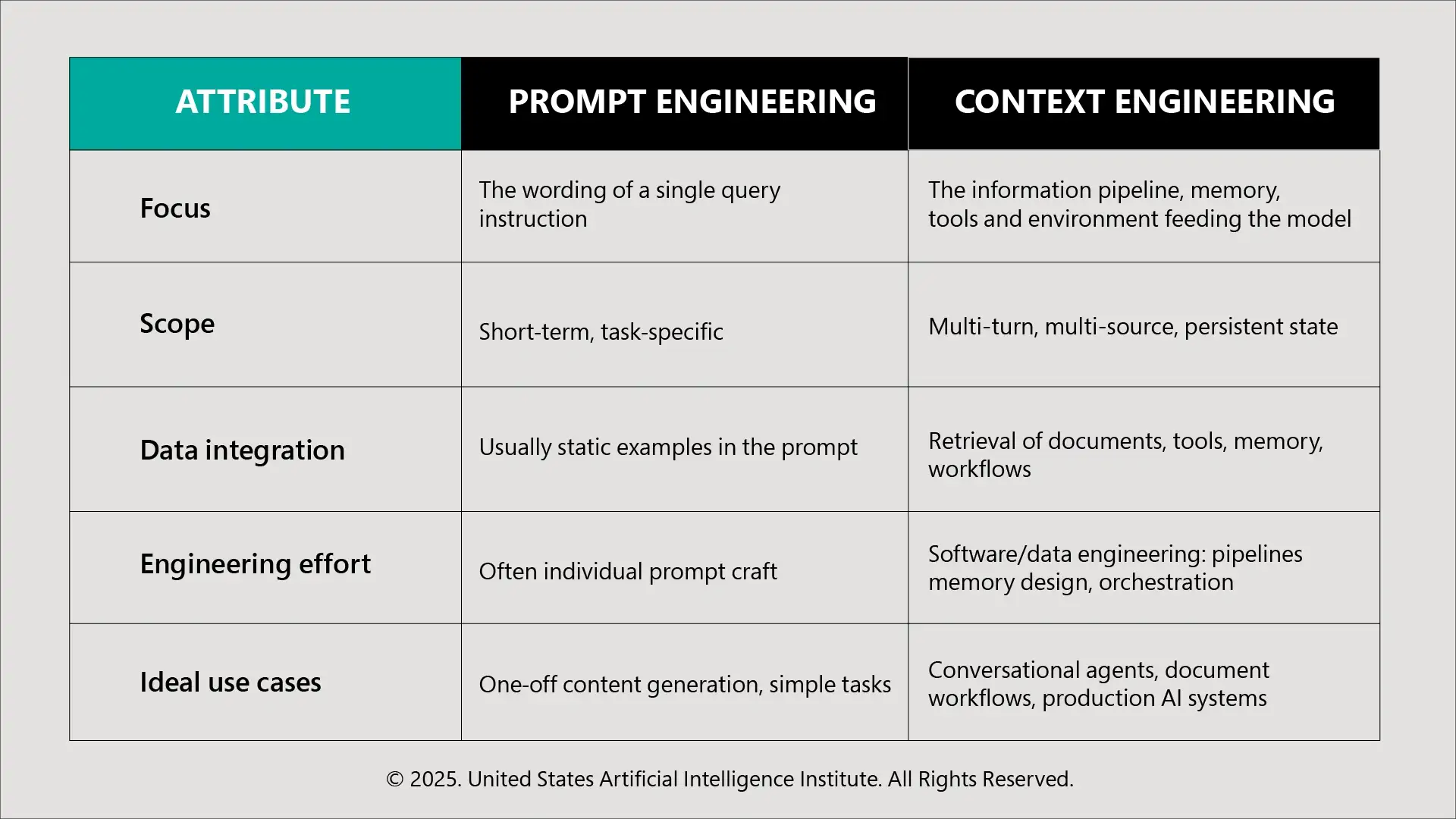
Another helpful comparison table (prompt vs. context engineering, which ties directly into Context Engineering vs Agentic Engineering):
Pros, Cons, and When to Choose in Context Engineering vs Agentic Engineering
Context Engineering shines when:
- You need reliability and low hallucinations
- Building RAG-heavy apps or long-context chatbots
- Managing enterprise knowledge at scale
Pros: Scalable, interpretable, cost-efficient. Cons: Still somewhat reactive; doesn’t “act” on its own.
Agentic Engineering excels when:
- Tasks require planning, iteration, and tool use
- You want autonomous workflows (e.g., coding agents, research bots)
- Human-in-the-loop oversight is acceptable
Pros: Truly autonomous, adaptive, high-leverage. Cons: Can be brittle without solid context; higher complexity.
In Context Engineering vs Agentic Engineering debates, the winner is often both. Hybrid “Agentic Context Engineering” (ACE) frameworks are emerging as the gold standard.
How Context Engineering Powers Agentic Systems in 2026
The real magic happens when Context Engineering vs Agentic Engineering work together. Strong context engineering gives agents persistent memory, fresh retrieval, and structured playbooks — turning them from flaky experimenters into reliable production workers.
Real-world examples:
- DevOps agents that remember past deployments (context) while autonomously troubleshooting (agentic).
- Customer service systems that pull live account data while planning multi-step resolutions.
Future outlook illustration for 2026 AI systems:

Microsoft Research’s ACE framework even treats contexts as “evolving playbooks” that self-improve — the perfect bridge in Context Engineering vs Agentic Engineering.
Final Studies on Context Engineering vs Agentic Engineering
Context Engineering vs Agentic Engineering is not a battle it’s a diapason that defines ultramodern AI systems in 2026. environment engineering provides the dependable foundation; agentic engineering delivers the independent horsepower. Master both( or their important mongrel), and you will make AI that does not just answer questions — it gets effects done.
As someone who is” lived” these shifts, I can tell you the future feels incredibly instigative. The brigades winning right now are the bones
treating environment as structure and agents as teammates.
What do you suppose — are you leaning more toward environment-first or diving straight into agentic workflows? Drop your studies in the commentary, and if you are erecting on beeznez.com, I’d love to hear how Context Engineering vs Agentic Engineering is showing up in your systems.
Further reading:
- Anthropic: Effective Context Engineering for AI Agents
- Neo4j: Context Engineering vs Prompt Engineering
- Microsoft Research: Agentic Context Engineering
Thanks for reading! If this helped clarify Context Engineering vs Agentic Engineering, share it with your network — and stay tuned for more AI deep dives here on beeznez.com.