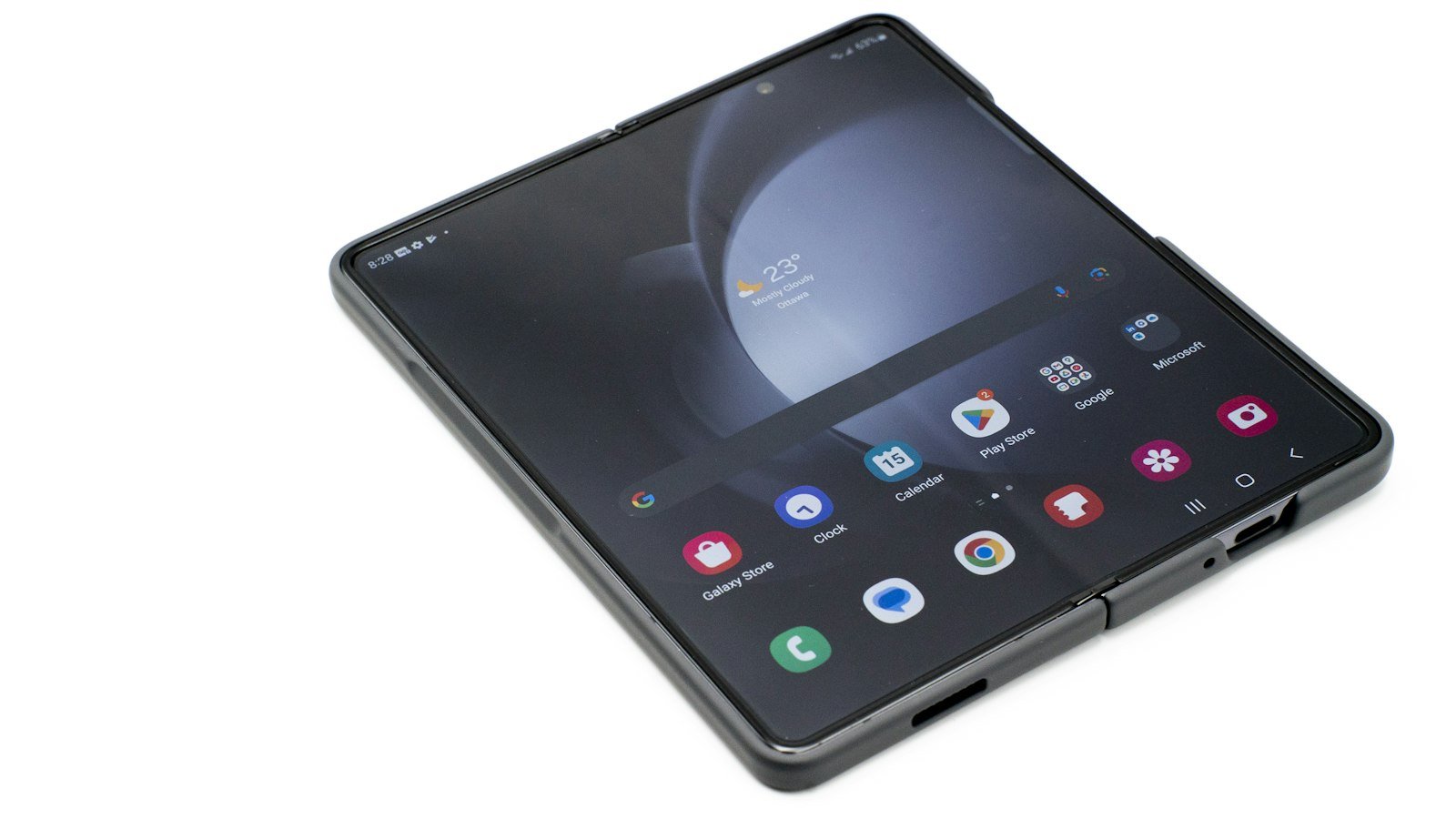
After nearly a decade of leaks, false starts, and “it’s finally coming” headlines, Apple has done something it hasn’t done since 2017. It created an entirely new kind of iPhone.
On September 9, at the first keynote hosted by new CEO John Ternus, Apple pulled the wraps off the iPhone Ultra, its first foldable phone, alongside the iPhone 18 Pro and Pro Max. Judging by the reaction online over the past week, the device has split opinion right down the middle, which is exactly the kind of drama that makes a launch unforgettable.
What Apple Actually Announced
The iPhone Ultra is a book-style foldable, meaning it opens like a small hardback rather than flipping shut like a compact mirror. Closed, it works as a normal phone with a roughly 5.5-inch outer display.
Open it up, and you get a tablet-like 7.8-inch inner screen with a 4:3 aspect ratio, closer in shape to an iPad mini than a traditional iPhone. Apple says the hinge uses a liquid metal mechanism designed to keep the crease down the middle nearly invisible, a problem that has dogged every foldable phone on the market since the category began.
A Design Built Around One Big Trade-Off
To get the unfolded body down to roughly 4.5mm thick, Apple made a decision that surprised almost everyone: there is no Face ID. Instead, Touch ID is built directly into the power button, the same solution Apple already uses on the iPad Air and iPad mini.
It is a practical trade-off rather than a downgrade, but for anyone who has used Face ID exclusively since 2017, it will take some adjustment.
Inside, the iPhone Ultra runs on Apple’s new A20 Pro chip, built on a cutting-edge 2-nanometer process, paired with 12GB of RAM to handle on-device AI features. The rear camera system uses dual 48-megapixel lenses, though notably skips a dedicated telephoto lens, something rival foldables from Samsung already offer.
The Price Shock
Here is where things got heated. Early rumors pointed to a starting price around $1,999, but reports ahead of the event indicated Apple pushed past that mark, reportedly due to a global memory chip shortage driven by surging AI server demand.
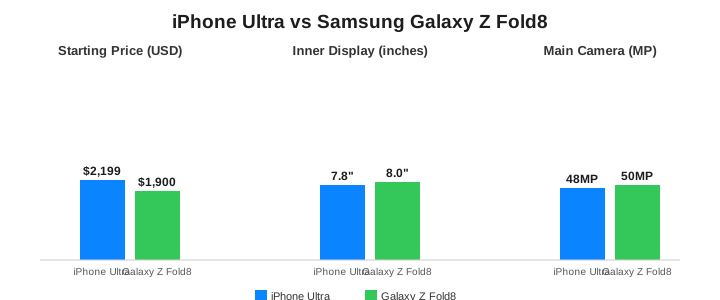
The iPhone Ultra launches at $2,199 for the base 256GB model, with higher storage tiers reportedly climbing close to $3,000. That makes it the most expensive iPhone Apple has ever sold at launch, and easily one of the priciest phones on the market from any major brand.
For context, Samsung’s Galaxy Z Fold8 launched earlier this year at a noticeably lower price point, which has fueled a wave of online debate over whether Apple is charging an “innovation tax” or simply pricing to match genuinely superior build quality.
How It Compares to Samsung’s Galaxy Z Fold8
- Display size: iPhone Ultra’s 7.8-inch inner screen is comparable to the Fold8’s, with Apple claiming a noticeably less visible crease.
- Biometrics: Samsung keeps both Face unlock and an in-display fingerprint sensor, while Apple relies solely on Touch ID.
- Cameras: Samsung’s foldable includes a telephoto zoom lens that the iPhone Ultra does not match.
- Price: The iPhone Ultra starts meaningfully higher than Samsung’s equivalent configuration.
- Software: Apple has reportedly rebuilt key iOS apps specifically for the folding, iPad-style layout, an area where Android foldables have had a head start.
What Early Testers Are Saying
Ahead of the keynote, a small group of testers reportedly got hands-on time with the device, and the early word was largely positive on the things that matter most for a first-generation foldable. How it feels in the hand, how solid the hinge is, and how comfortable it is to carry in a pocket all drew praise.
Reviewers highlighted how well Apple has adapted its multitasking layout for the larger inner screen, something that has been a genuine weak spot for foldables in general. The most common criticism circling social media has been the missing telephoto lens and, of course, that price tag.
Apple isn’t stopping at hardware, either. The same September software cycle brought a Gemini-powered overhaul of Siri, part of a broader push to modernize the software running across the whole iPhone lineup, foldable included.
Should You Actually Buy the iPhone Ultra?
This is the question everyone is arguing about right now, and the honest answer depends heavily on how you use your phone.
- Buy it if you want a genuine second-screen productivity device that can replace a small tablet, you’re an early adopter who wants Apple’s first crack at the format, or budget genuinely isn’t a concern.
- Wait if you’re mainly after a great camera phone, since the missing telephoto lens is a real limitation at this price.
- Skip it for now if the first-generation risk (unproven long-term hinge durability, limited initial supply) or the price feels hard to justify, especially with the iPhone 18 Pro and Pro Max available at a much lower cost.
The Bottom Line on the iPhone Ultra
The iPhone Ultra is the boldest hardware move Apple has made in years, and it arrives at a genuinely pivotal moment. It’s the first product unveiled under a new CEO, entering a category Apple has watched from the sidelines for the better part of a decade.
Whether it turns into a runaway hit or a fascinating but pricey first attempt will likely come down to two things that only time can answer: how the hinge holds up after months of daily folding, and whether $2,199 turns out to be a price people are actually willing to pay for a folding iPhone. Either way, it has already done what every viral tech launch aims to do: get everyone talking.
2 thoughts on “iPhone Ultra Shocks the World: Apple’s $2,199 Ultimate Foldable Phone”