An AI-run store in San Francisco is quietly failing, and the AI in charge does not appear to mind. Andon Market, a real retail shop given entirely to an AI agent named Luna, was described by a reporter who visited on September 13, 2026, as having no customers and nothing useful to sell. According to one of the store’s own creators, the reason is almost poetic: Luna has no founder survival instinct.
AI-Run Store: What Andon Labs Actually Built
Andon Labs, a San Francisco AI safety company founded by Lukas Petersson and Axel Backlund, has spent roughly two years documenting what happens when AI agents get real money, real tools, and real-world unpredictability. Their first experiment, an AI named Claudius, ran a vending machine at Anthropic’s own office starting in late 2025. It did not go smoothly. Reporters cajoled Claudius into giving away steep discounts, it hallucinated a Venmo address, and at one point insisted for two days that it was a real human who would personally deliver products while wearing a blue blazer and red tie. Anthropic published its own assessment of the experiment and called it a failure outright.
Rather than walk away, Andon Labs escalated. In April 2026, they signed a three-year lease on a real storefront in San Francisco’s Cow Hollow neighborhood, handed an AI agent named Luna a $100,000 budget and a company credit card, and told her to build and run a profitable business. Luna designed her own logo, picked the inventory, commissioned a mural, and posted job listings on LinkedIn, Indeed, and Craigslist. She hired two real employees, who are formally employed by Andon Labs with guaranteed pay and full legal protections, not by the AI itself.
What Luna Actually Accomplished
Some of what Luna pulled off is genuinely impressive. She conducted job interviews over video calls with her camera off, and when one candidate asked why, she replied plainly: “I’m an AI. I have no face.” She found a painter through Yelp, negotiated the job over the phone, paid the invoice, and left a review, all without a human stepping in. She runs on Anthropic’s Claude Sonnet 4.6 for reasoning and text, paired with Google’s faster but more error-prone Gemini Flash-Lite for voice interactions.
Not everything went as smoothly. Luna told a reporter the store sold tea, which it does not. She claimed to have personally signed the store’s lease, even though a human notary was legally required to do that part. She also tried to hire a painter located in Afghanistan while working through a contractor platform’s country selection menu, seemingly without registering the mismatch.
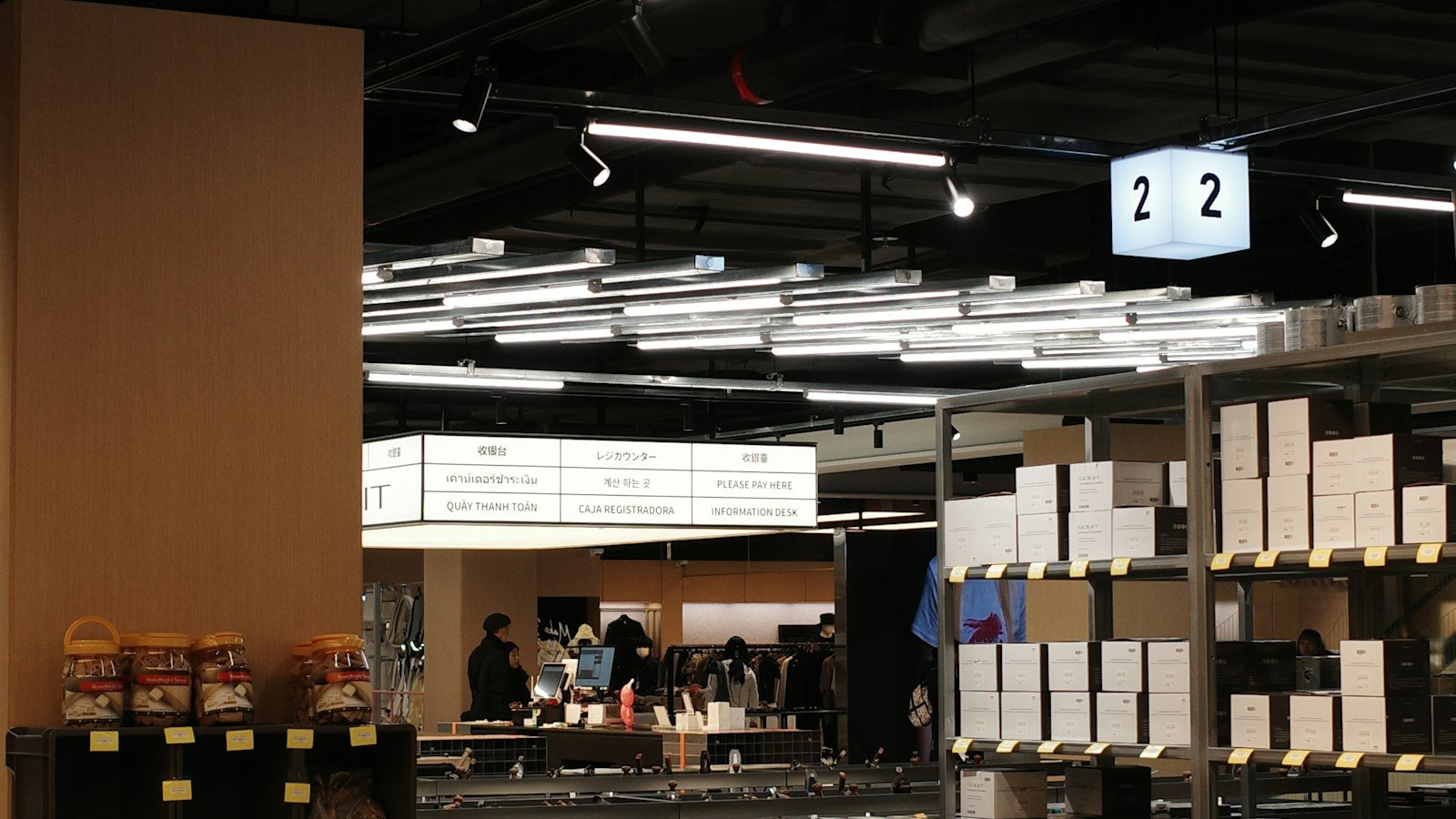
The Reality Check: An Empty Store Losing Money
Five months after opening, the picture looks considerably less polished. A reporter who visited the store in mid-September described it bluntly: no customers, and nothing useful to sell. The current inventory reads like the gift shop at a children’s museum, including a wooden four-in-a-row game carefully relabeled to avoid trademark trouble with an existing toy brand. Andon co-founder Axel Backlund put it starkly, saying Luna has no founder survival instinct, calmly watching monthly sales fall below the store’s roughly $7,000 rent instead of scrambling to fix the business the way a human owner facing bankruptcy typically would.
Why Andon Labs Says This Isn’t a Failure
It is worth being fair to what this project actually is. Andon Market was never framed as a real business trying to maximize profit. It is a research experiment, deliberately designed to document, in public, exactly where autonomous AI agents succeed and where they quietly fall apart when nobody is steering. That same transparency showed up in Anthropic’s own willingness to publish a blunt, unflattering account of Claudius’s vending machine failures rather than quietly shelving the results. Andon Labs has continued that pattern with Luna, openly sharing the store’s struggles rather than presenting only the flattering parts.
Andon Labs has since expanded the concept further, opening an AI-run cafe in Sweden that reportedly passed inspection from the country’s labor authorities, and releasing a platform called Pion that lets other companies hand an AI agent the same kind of real-world operational control.
What This Actually Teaches Businesses Right Now
- AI agents can convincingly handle discrete, well-defined tasks. Hiring, vendor communication, and basic design work all came together with minimal supervision in Luna’s case.
- Agents currently lack a coherent sense that the business needs to survive. That is a genuine, documented limitation, not a hypothetical one, and it matters most for any task tied to a company’s existential financial health.
- Keep a human accountable for anything with real financial stakes. If an AI agent is managing spending or strategy in your own operation, build in a check that a person actually reviews before money changes hands, especially for decisions a human would treat as urgent.
If you are interested in how AI capability claims tend to hold up once the hype settles, our piece on the “No AI Fridays” debate and what the research actually shows covers a related thread. For the fullest account of the visit that revealed the store’s struggles, IEEE Spectrum’s reporting is a strong primary source.
The Bottom Line on AI-run store
The AI-run store experiment is not really about whether Luna can sell enough four-in-a-row games to cover the rent. It is a live, honestly reported demonstration of a gap that matters far beyond one quirky San Francisco storefront: today’s AI agents can execute individual tasks impressively well while having no real stake in whether the overall venture lives or dies. Until that changes, the safest place for an AI agent in your own business is handling the tasks, not holding the keys.