Best HubSpot Alternatives for Growing Startups 2026: Comparisons and Reviews
Introduction
In the fast-paced world of startups, choosing the right CRM can make or break your growth trajectory. HubSpot is a popular choice for its all-in-one marketing, sales, and service features, but it’s not always the most cost-effective or scalable option for emerging businesses. Many startups seek HubSpot alternatives due to rising costs, complexity, or the need for more tailored tools.
This article dives into the top HubSpot alternatives optimized for growing startups, focusing on affordability, ease of use, and integration capabilities. We’ll compare key options based on recent 2026 data to help you find the perfect fit.
Whether you’re dealing with limited budgets or rapid scaling, these HubSpot competitors offer robust features without the premium price tag. Let’s start with a quick comparison table, followed by in-depth reviews.
Comparison Table of Top HubSpot Alternatives
| CRM Tool | Starting Price (per user/month) | Key Features | Scalability Rating (out of 10) | Best For Startups Because… |
|---|---|---|---|---|
| Salesforce Starter Suite | $25 | Lead management, email marketing, 360-degree customer view, mobile app | 10 | Comprehensive tools at an affordable entry point for sales and marketing automation. |
| Zoho CRM | Free (up to 3 users); $14 | Customizable dashboards, AI automation, multi-channel marketing | 9 | Budget-friendly with extensive integrations for cost-conscious teams. |
| Pipedrive | $14.90 | Visual sales pipelines, AI analytics, email tracking | 7 | Simple, sales-focused interface for quick deal closures. |
| ActiveCampaign | $15 | Email automation, lead scoring, omni-channel marketing | 6 | Marketing automation for lean teams handling cross-channel strategies. |
| EngageBay | Free (250 contacts); $12 | Lead scoring, landing page builder, live chat | 6 | All-in-one affordability for bootstrapped startups. |
| Freshsales Suite | $9 | AI insights, multichannel support, integrations | 6 | Low-cost entry with AI-powered sales processes. |
| Bigin | $9 | Pipelines, automations, email campaigns | Not specified (high for small teams) | Simplified CRM for beginners transitioning from spreadsheets. |
| Keap | $159 (for 2 users) | Marketing automation, e-commerce tools, reporting | 5 | Unified client management for solopreneurs and small teams. |
This table highlights how these HubSpot alternatives stack up in terms of value.
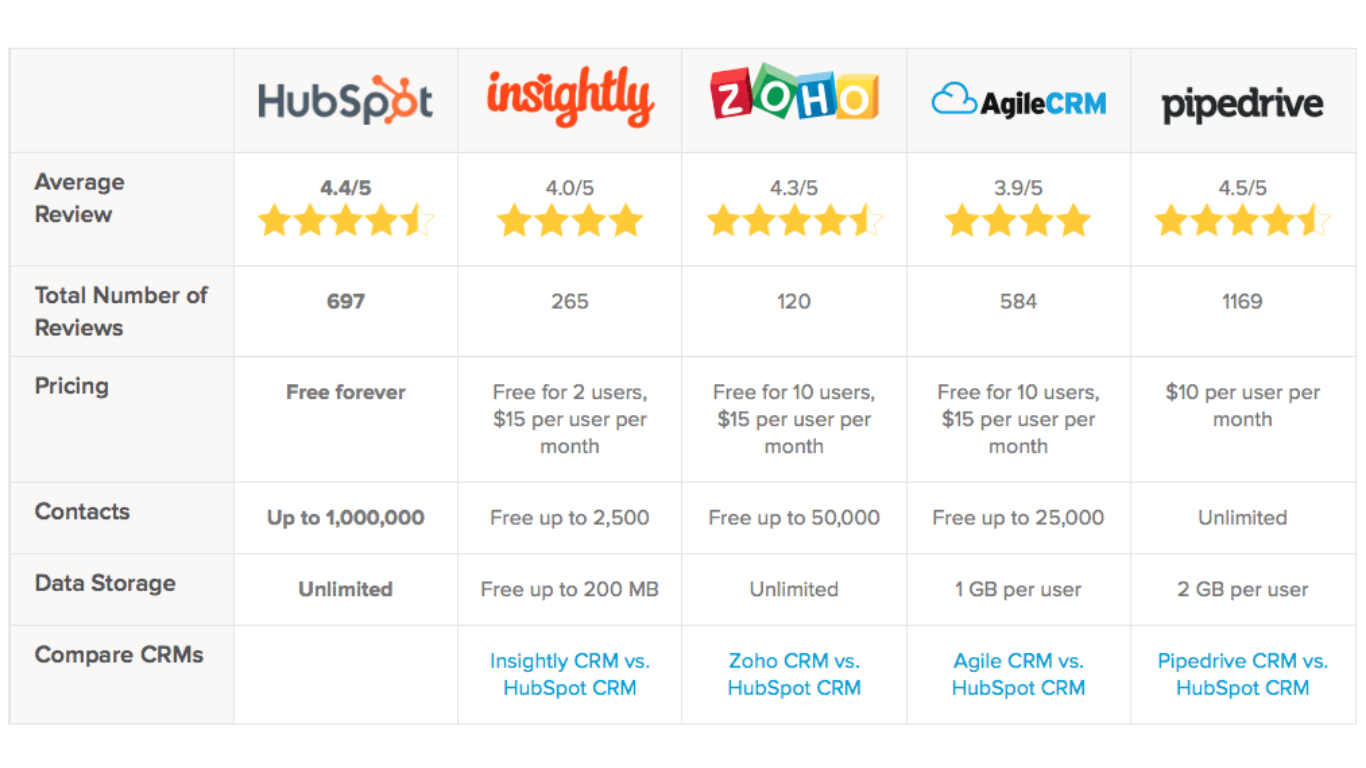
For a visual on pricing across CRMs, check this median price comparison chart.

Why Consider HubSpot Alternatives for Your Startup?
HubSpot’s free tier is appealing, but as your startup grows, premium features can become expensive—often exceeding $800/month for advanced plans. HubSpot alternatives provide similar functionalities like lead nurturing, automation, and analytics at a fraction of the cost, making them ideal for resource-limited teams. According to 2026 reviews, tools like Zoho and Salesforce score high on G2 for scalability and user satisfaction, helping startups avoid vendor lock-in while integrating with existing tech stacks.
Key benefits include:
- Cost Savings: Many offer free plans or low starting prices tailored for startups.
- Customization: Easier to adapt without HubSpot’s rigid structure.
- Scalability: Grow from basic CRM to full suites as your business expands.
- Integration Focus: Seamless connections with tools like Google Workspace or Slack.
Now, let’s review the top HubSpot alternatives in detail.
1. Salesforce Starter Suite
Salesforce Starter Suite is a powerhouse among HubSpot alternatives, designed specifically for small businesses and startups. It offers a cloud-based CRM that manages leads, sales, and customer service without the enterprise-level complexity.
Key Features:
- Capture and organize leads, nurture them through pipelines.
- Personalized email marketing with landing pages and performance insights.
- Unified customer interactions for better support.
- Mobile app for on-the-go access.
- Built-in commerce tools for online stores.
Pricing: $25 per user/month (billed annually); 30-day free trial.
Pros:
-
- High scalability (10/10 rating) for future growth.
- Integrates with over 1,000 apps via AppExchange.
- AI-driven insights for sales forecasting.
Cons:
-
- Slightly higher starting price than some competitors.
- May require initial setup time for customizations.
For startups, it’s excellent for building a scalable foundation. Here’s a screenshot of the Salesforce dashboard to visualize its interface:

2. Zoho CRM
Zoho CRM stands out as one of the most affordable HubSpot alternatives, with a free plan for up to three users. It’s part of a larger ecosystem of business apps, making it versatile for startups needing more than just CRM.
Key Features:
- Customizable reports and dashboards for sales metrics.
- AI automation (Zia) for lead scoring and predictions.
- Multi-channel marketing including email and social.
- Project management integration for team collaboration.
- No-code tools for quick workflows.
Pricing: Free (basic); Standard at $14/user/month (billed annually).
Pros:
-
- Highly customizable and integrates with 500+ apps.
- Strong analytics for tracking campaign ROI.
- Scalable to enterprise levels (9/10 rating).
Cons:
-
- Learning curve for advanced customizations.
- Free plan limits features for larger teams.
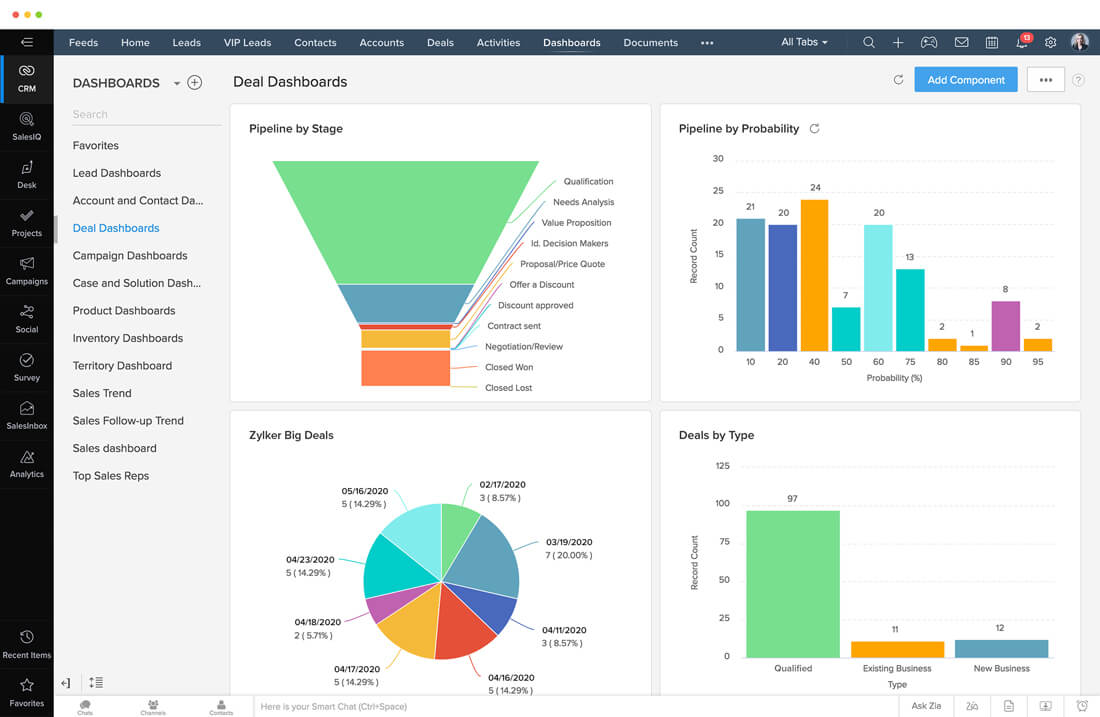
Ideal for cost-controlled startups, Zoho helps bridge sales and marketing seamlessly. See the Zoho CRM interface in action:
3. Pipedrive
Pipedrive is a sales-centric HubSpot competitor, emphasizing visual pipelines to help startups close deals faster. It’s straightforward, making it a favorite for teams new to CRM.
Key Features:
- Visual deal tracking with customizable stages.
- AI-powered sales analytics and recommendations.
- Email integration for tracking opens and clicks.
- Activity reminders and revenue forecasting.
- Integrations with tools like Slack and Google.
Pricing: Essential at $14.90/user/month (billed annually); 14-day free trial.
Pros:
-
- User-friendly for small sales teams (7/10 scalability).
- Focuses on pipeline management to boost conversions.
- Affordable with strong mobile support.
Cons:
-
- Less emphasis on marketing compared to HubSpot.
- Advanced features require higher tiers.
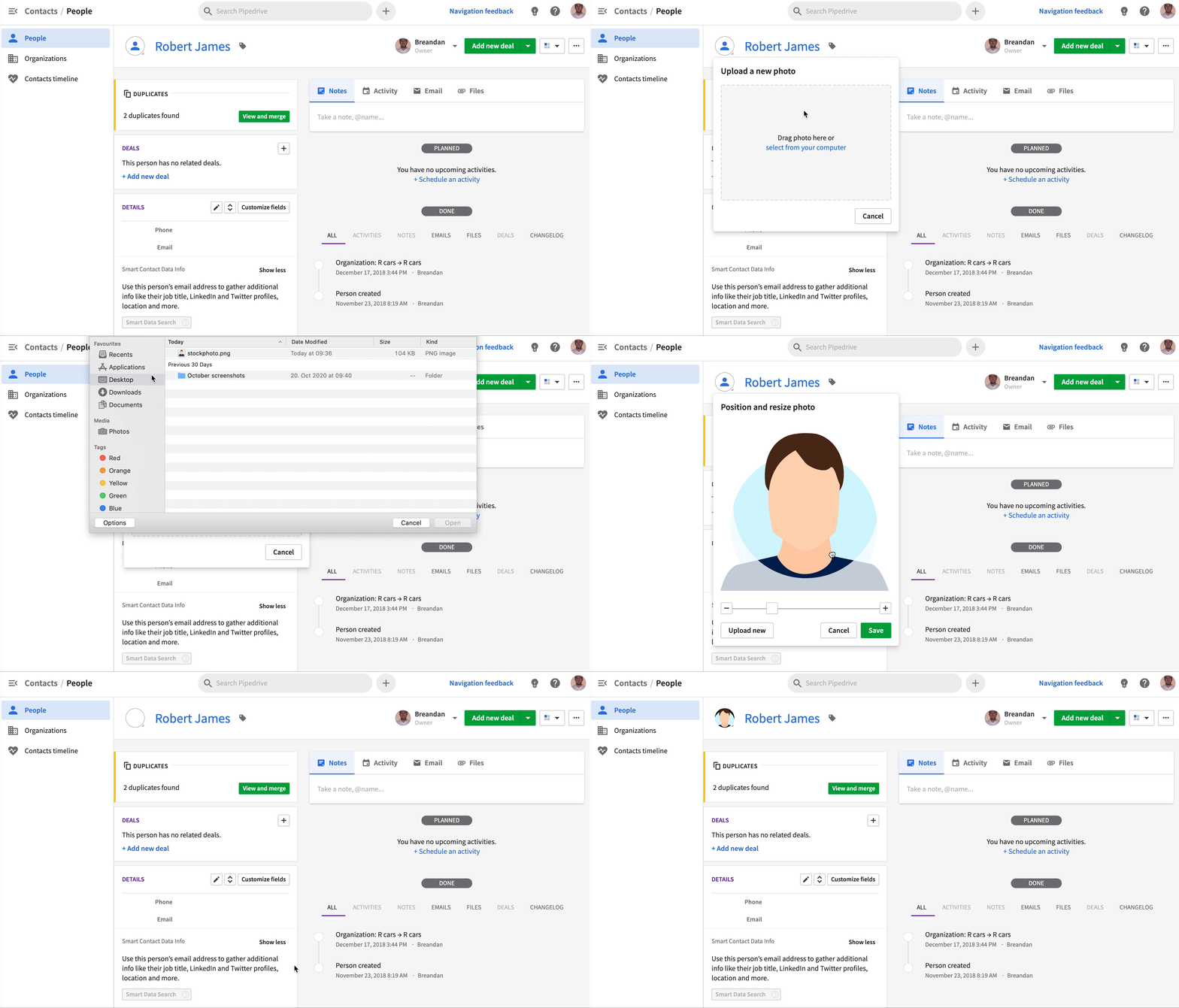
For growing startups, Pipedrive simplifies sales processes. Check out a Pipedrive screenshot:
4. ActiveCampaign
ActiveCampaign excels in marketing automation, positioning it as a strong HubSpot alternative for startups focused on email and lead nurturing.
Key Features:
- Omni-channel campaigns with A/B testing.
- Lead scoring and automation workflows.
- Contact segmentation based on behavior.
- Reporting dashboards for campaign performance.
- Integrations with Salesforce and Google Analytics.
Pricing: $15/user/month (billed annually); 14-day free trial.
Pros:
-
- Powerful for cross-channel strategies (6/10 scalability).
- Affordable for lean marketing teams.
- Prebuilt automations save time.
Cons:
-
- Steeper learning for non-marketers.
- Limited in advanced sales forecasting.
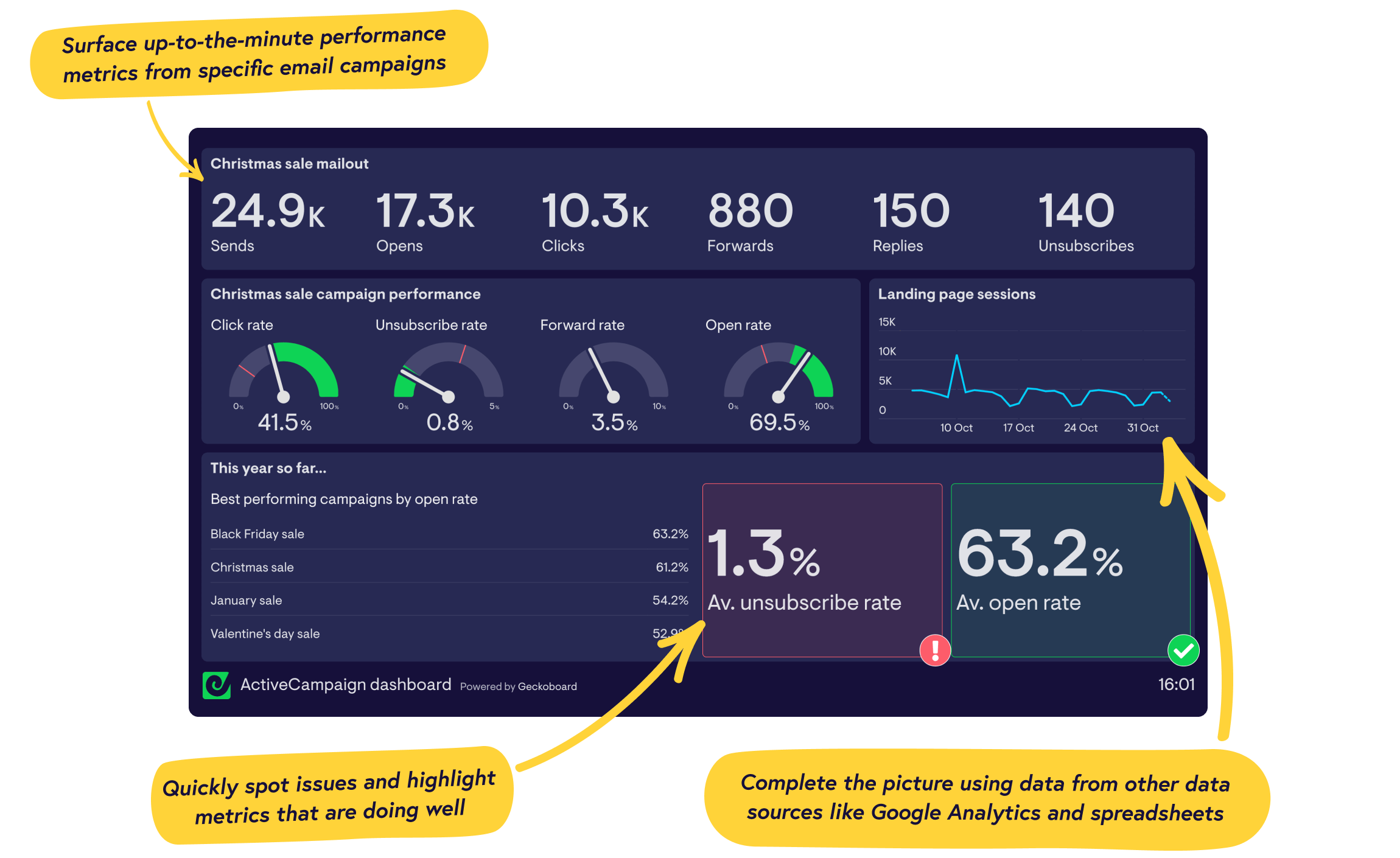
It’s perfect for startups scaling email marketing. Here’s an ActiveCampaign dashboard example:
5. EngageBay
EngageBay is an all-in-one HubSpot alternative on a budget, combining CRM, marketing, and support for bootstrapped startups.
Key Features:
- Lead scoring and predictive analytics.
- Drag-and-drop landing page builder.
- Email templates and social media tracking.
- Unified dashboard for customer views.
- Project management for collaboration.
Pricing: Free (basic); $12/user/month (billed annually).
Pros:
-
- Cost-effective with no trial needed for basics (6/10 scalability).
- Integrates sales, marketing, and support.
- Mobile-ready for remote teams.
Cons:
-
- Fewer advanced AI features than premium options.
- Contact limits on free plan.
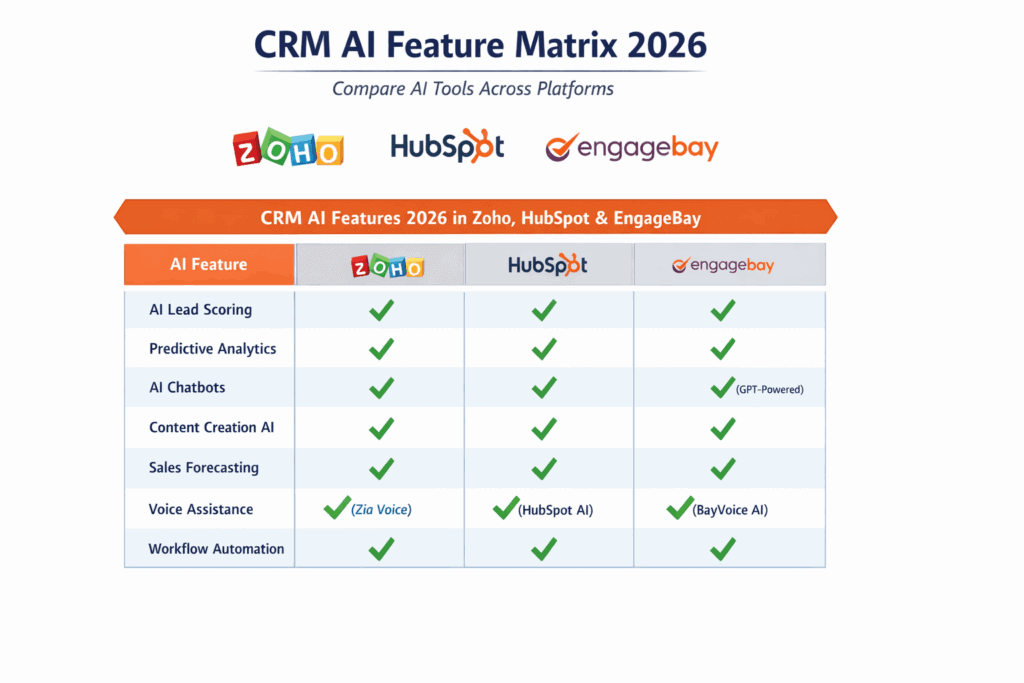
Great for startups wanting an integrated platform without high costs. For AI features comparison, see this matrix:
6. Freshsales Suite
Freshsales is an AI-driven HubSpot competitor, ideal for startups unifying sales and marketing.
Key Features:
- AI lead prioritization and insights.
- Multichannel interactions (email, chat, SMS).
- Custom reports and integrations via marketplace.
- Automated workflows for deal management.
Pricing: $9/user/month (billed annually); 21-day free trial.
Pros:
-
- Low entry price with strong AI (6/10 scalability).
- Centralized data for faster support.
- Good for cross-selling opportunities.
Cons:
-
- May need add-ons for full e-commerce.
- Interface can feel cluttered initially.
7. Bigin
Bigin, from Zoho, is a streamlined HubSpot alternative for startups just starting with CRM.
Key Features:
- Simple pipelines and contact management.
- Built-in automations and email campaigns.
- Payment collection integration.
- Dashboards for quick insights.
Pricing: $9/user/month; free for one user.
Pros:
-
- Affordable and beginner-friendly.
- Scales to full Zoho CRM.
- Mobile apps for on-the-go use.
Cons:
-
- Limited for complex workflows.
- Best as a starter tool.
8. Keap
Keap focuses on automation, making it a solid HubSpot alternative for client-focused startups.
Key Features:
- 360-degree customer views.
- Automated follow-ups and lead nurturing.
- E-commerce and payment processing.
- Performance dashboards.
Pricing: $159 for two users/month (billed annually); 14-day free trial.
Pros:
-
- Unifies sales and marketing (5/10 scalability).
- Strong for solopreneurs.
- Mobile app for engagement.
Cons:
-
- Higher minimum cost.
- Less flexible for large teams.
Conclusion: Choosing the Right HubSpot Alternative
Selecting among these HubSpot alternatives depends on your startup’s needs—prioritize sales with Pipedrive, marketing with ActiveCampaign, or all-in-one affordability with Zoho. Test free trials to ensure fit, and consider scalability for long-term growth. By switching to these HubSpot competitors, startups can save costs while enhancing efficiency in 2026. For more insights, explore resources from Salesforce and Forbes.
FAQ: HubSpot Alternatives for Startups
1. What are the best HubSpot alternatives for startups on a tight budget?
For startups looking for affordable CRM solutions, options like Zoho CRM (starting free for up to 3 users, then $14/user/month) and Freshsales Suite ($9/user/month) stand out as top HubSpot competitors. These provide essential features like lead management and automation without the high costs of HubSpot’s premium plans, making them ideal for bootstrapped teams.
2. How do HubSpot alternatives compare in terms of scalability for growing startups?
Most HubSpot alternatives, such as Salesforce Starter Suite (rated 10/10 for scalability) and Zoho CRM (9/10), are designed to grow with your business. They offer seamless upgrades from basic CRM to enterprise-level tools, including AI insights and integrations, ensuring they support rapid expansion without vendor lock-in.
3. Which HubSpot competitor is best for sales-focused startups?
Pipedrive is a strong choice among startup CRM reviews for its visual pipelines and AI analytics, starting at $14.90/user/month. It’s tailored for quick deal closures and integrates well with tools like Slack, making it a user-friendly HubSpot alternative for sales teams.
4. Are there HubSpot alternatives with strong marketing automation features?
Yes, ActiveCampaign excels in this area with omni-channel marketing and lead scoring, priced at $15/user/month. As a HubSpot competitor, it offers A/B testing and automation workflows, perfect for startups handling email and social campaigns efficiently.
5. What should startups consider when switching to HubSpot alternatives?
Key factors include pricing (e.g., Salesforce for startups at $25/user/month), ease of integration, and feature sets like Zoho CRM features for customization. Test free trials, review user ratings on platforms like G2, and ensure the tool aligns with your growth needs to avoid disruptions.
6. Can HubSpot alternatives handle integrations with other SaaS tools?
Absolutely—most, like EngageBay and Bigin, integrate with over 500 apps, including Google Workspace and e-commerce platforms. This makes them versatile affordable CRM solutions for startups building a tech stack.
7. Is there a free HubSpot alternative suitable for beginners?
Zoho CRM and EngageBay offer free tiers with basic features like contact management and email campaigns. They’re great entry points for beginners, with options to scale up as your startup grows.
For more details, refer to our full comparisons and reviews in the article above. If you have additional questions on Pipedrive pricing or ActiveCampaign automation, feel free to reach out!
Related Tags:
#HubSpotAlternatives, #BestCRMForStartups, #HubSpotCompetitors, #AffordableCRMSolutions, #StartupCRMReviews, #SalesforceForStartups, #ZohoCRMFeatures, #PipedrivePricing, #ActiveCampaignAutomation, #StartupGrowthTools